
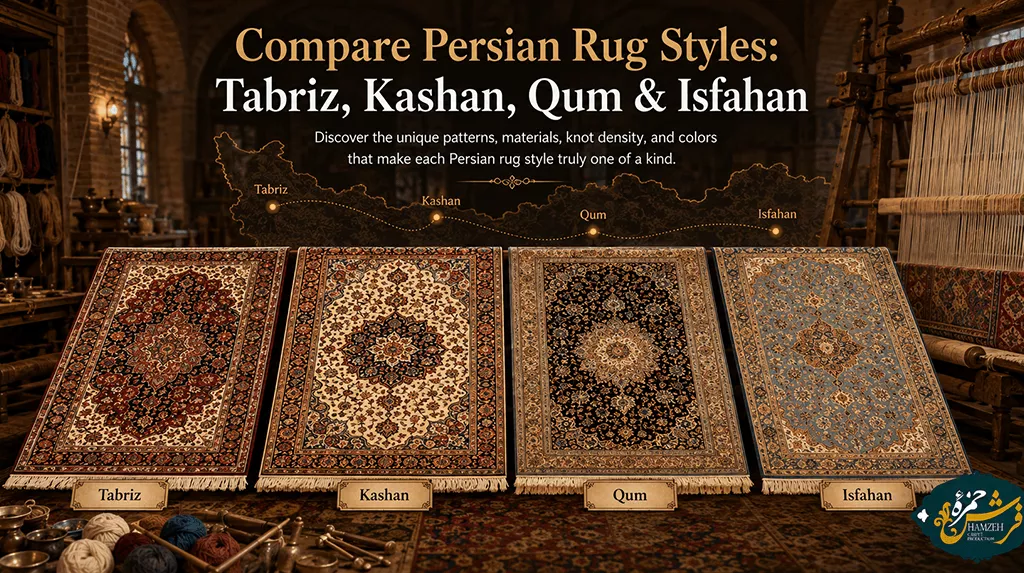
Choosing a handmade Persian rug is about more than selecting a beautiful design. Each weaving region in Iran has developed its own distinctive style, reflecting centuries of craftsmanship, artistic tradition, and cultural heritage. While all Persian rugs share a reputation for exceptional quality, Persian rug styles vary significantly in their patterns, materials, knot density, color palettes, and overall character.
In this guide, we’ll compare four of the most celebrated weaving centers—Tabriz, Kashan, Qum, and Isfahan—to help you understand the differences between Persian rugs and what makes each style unique. Whether you’re looking for a durable family heirloom, a luxurious silk masterpiece, or a timeless decorative piece, knowing these distinctions will help you make a more confident and informed choice.
By the end of this article, you’ll have a clear understanding of Tabriz vs Kashan rugs, Tabriz vs Qum rugs, and Tabriz vs Isfahan rugs, along with practical insights into which Persian rug is best for your home, budget, and personal style.
What Makes Persian Rug Styles Unique?
One of the defining qualities of Persian rug styles is that each reflects the identity of the region where it is woven. Rather than following a single design tradition, Persian rugs have evolved through centuries of regional craftsmanship, with every major weaving center developing its own techniques, patterns, and artistic influences. This diversity is what sets authentic Persian hand-knotted rugs apart from handmade carpets produced elsewhere.
The uniqueness of each style goes beyond visual appeal. Elements such as knot density, weaving precision, materials, natural dyes, and design composition all contribute to a rug’s appearance, durability, and value. For example, some styles emphasize intricate silk craftsmanship, while others are admired for their versatility, durability, or balanced floral designs. Understanding these characteristics is the first step in recognizing the differences between Persian rugs and choosing the style that best suits your home and personal preferences.
How Persian Rug Styles Developed Across Different Regions
The rich variety of Persian rug styles is the result of centuries of local tradition and craftsmanship. As carpet weaving spread across different regions of Iran, each city developed its own artistic identity based on available materials, cultural influences, historical events, and the expertise of local weavers. Instead of producing identical carpets, weaving communities refined distinctive styles that have been passed down from one generation to the next.
Cities such as Tabriz, Kashan, Qum, and Isfahan each became renowned for different strengths. Tabriz is known for its remarkable design diversity and technical excellence, Kashan for its elegant floral compositions, Qum for exceptionally fine silk rugs, and Isfahan for its harmonious layouts and intricate detailing. These regional characteristics continue to define their reputation in today’s handmade rug market.
Why Weaving Traditions Vary from City to City
The differences between Persian rugs are closely tied to the environment and history of each weaving region. Local wool quality, access to silk, traditional dyeing methods, artistic influences, and even the preferences of royal courts and merchants all shaped how rugs were designed and woven. Over time, these factors created recognizable styles that experienced collectors and buyers can identify at a glance.
Although all authentic Persian rugs share exceptional craftsmanship, each region prioritizes different qualities. Some focus on intricate detail and luxurious materials, while others emphasize durability, versatility, or bold artistic expression. These long-standing traditions are what make comparing Persian rug styles so valuable, helping buyers choose a rug that matches both their aesthetic preferences and practical needs.
Differences Between Persian Rugs: Tabriz, Kashan, Qum & Isfahan
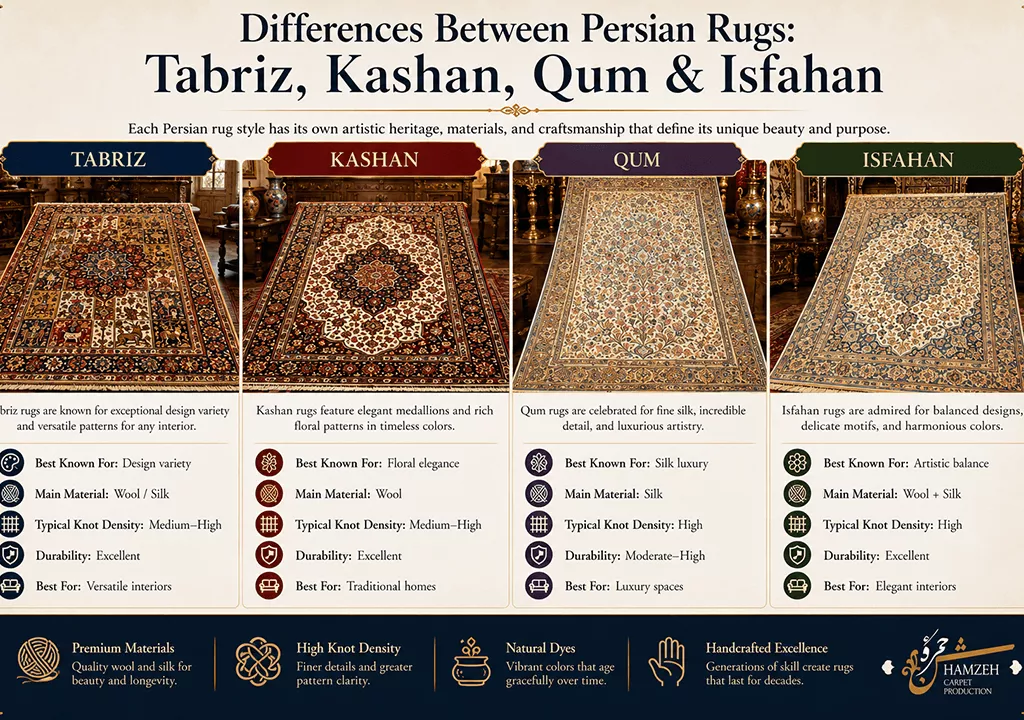
Although all four cities are renowned for producing authentic handmade Persian rugs, each represents a distinct artistic tradition. The differences between Persian rugs are not limited to appearance—they also include materials, weaving techniques, knot density, and intended use. Understanding these distinctions makes it easier to appreciate the character of each rug and choose one that complements your home, lifestyle, and budget.
Design, Color, and Pattern Differences
The most noticeable difference among Persian rug styles is their visual identity. Each weaving center has developed signature motifs and color palettes that reflect its local heritage and artistic influences.
- Tabriz rugs are known for their exceptional design diversity, featuring floral medallions, geometric motifs, pictorial scenes, hunting designs, and even contemporary interpretations.
- Kashan rugs typically showcase elegant central medallions surrounded by detailed floral patterns, with deep reds, navy blues, and ivory tones creating a timeless appearance.
- Qum rugs often display highly intricate floral and garden-inspired designs. Many are woven from silk, giving them remarkable clarity, vibrant colors, and a luxurious finish.
- Isfahan rugs are admired for their balanced compositions, delicate arabesques, refined floral motifs, and harmonious color combinations that highlight their artistic precision.
While each style reflects the rich tradition of Persian carpet weaving, their distinctive designs allow buyers to choose a rug that best complements their interior décor and personal taste.
Materials, Knot Density, and Craftsmanship
Beyond appearance, the quality of a Persian rug is shaped by the materials and craftsmanship behind it. Premium wool remains the most common material for durable everyday rugs, while silk is often used to achieve exceptional detail and a more luxurious finish. Some rugs combine both fibers to balance durability with elegance.
Knot density also varies between regions and plays an important role in defining pattern clarity. Higher knot density allows weavers to create finer details, although it should be considered alongside material quality, dyeing techniques, and overall craftsmanship rather than as the only measure of value.
If you’d like to understand how knot density affects a rug’s detail, durability, and value, read our in-depth guide on What Is Rug Knot Density (Raj Shomar)?
Across all four regions, skilled artisans rely on traditional hand-knotting methods passed down through generations. Their precision, consistency, and attention to detail are what transform natural materials into rugs that can last for decades when properly cared for.
Which Persian Rug Style Fits Different Homes?
Choosing the right rug depends on both your aesthetic preferences and how the space will be used.
- Tabriz rugs are an excellent choice for homeowners who want flexibility, offering designs that work equally well in traditional and contemporary interiors.
- Kashan rugs suit formal living rooms, dining areas, and classic interiors where rich colors and elegant floral patterns create a sophisticated atmosphere.
- Qum rugs are ideal for luxury spaces, executive offices, or collectors seeking fine silk craftsmanship and highly detailed artistic pieces.
- Isfahan rugs complement refined interiors that emphasize symmetry, elegance, and timeless Persian design.
There is no single answer to which Persian rug is best. The ideal choice depends on your priorities—whether you value versatility, traditional elegance, luxurious materials, or investment-quality craftsmanship. By understanding these differences, you can confidently select a rug that enhances both your home and your long-term appreciation for Persian artistry.
| Feature | Tabriz | Kashan | Qum | Isfahan |
| Best Known For | Design variety | Floral elegance | Silk luxury | Artistic balance |
| Main Material | Wool / Silk | Wool | Silk | Wool + Silk |
| Typical Knot Density | Medium–High | Medium–High | High | High |
| Durability | Excellent | Excellent | Moderate–High | Excellent |
| Best For | Versatile interiors | Traditional homes | Luxury spaces | Elegant interiors |
Tabriz Rugs: Versatility and Exceptional Craftsmanship
Among all Persian rug styles, Tabriz rugs are often regarded as the most versatile. Woven in one of Iran’s oldest and most respected carpet-weaving centers, they combine exceptional craftsmanship with an extraordinary range of designs. While many Persian rugs are known for a signature look, Tabriz weavers have mastered everything from traditional floral medallions and hunting scenes to geometric motifs, pictorial designs, and even contemporary patterns.
This versatility allows Tabriz rugs to complement a wide variety of interior styles without sacrificing authenticity. Whether woven from premium wool, fine silk, or a blend of both, they are valued for their balanced craftsmanship, durability, and artistic detail, making them a popular choice among homeowners, interior designers, and collectors alike.
Why Tabriz Rugs Stand Out Among Persian Rug Styles
The defining characteristic of Tabriz rugs is their remarkable design flexibility. Unlike weaving centers that specialize in a narrower range of patterns, Tabriz artisans produce rugs in countless layouts, sizes, and color combinations while maintaining consistently high weaving standards. This ability to combine creativity with technical precision has helped establish Tabriz as one of the most influential weaving traditions in the world of handmade Persian carpets.
Craftsmanship is another distinguishing feature. Many Tabriz rugs are woven with medium to high knot densities, allowing artisans to create intricate details and well-defined motifs. Combined with carefully selected natural materials and generations of weaving expertise, these rugs offer both visual beauty and long-term durability, making them suitable for everyday living spaces as well as decorative collections.
Tabriz vs Kashan Rugs: Design and Durability
When comparing Tabriz vs Kashan rugs, the most noticeable difference is their approach to design. Tabriz rugs offer exceptional variety, ranging from floral medallions and pictorial scenes to geometric and modern-inspired patterns. Kashan rugs, on the other hand, are best known for their classic Persian elegance, featuring symmetrical floral compositions, graceful vines, and rich color palettes that have remained timeless for centuries.
Durability is another area where both styles perform exceptionally well. Tabriz rugs often provide greater flexibility in materials, knot density, and design, making them suitable for a broader range of homes and lifestyles. Kashan rugs are equally durable when expertly woven, but they are generally chosen by buyers who appreciate traditional Persian aesthetics and formal interior settings.
Rather than one style being superior to the other, the decision depends on whether you prioritize design diversity or timeless classical elegance.
Who Should Choose a Tabriz Rug?
A Tabriz rug is an excellent choice for buyers seeking a balance of craftsmanship, versatility, and lasting value. Its wide range of patterns makes it easy to find a design that suits both traditional and contemporary interiors, while its durable construction allows many pieces to be enjoyed for generations with proper care.
If you appreciate artistic variety without compromising quality, Tabriz rugs are among the most adaptable Persian rug styles available. They are especially well suited for homeowners looking for a statement piece, first-time buyers investing in an authentic handmade Persian rug, or collectors who value both craftsmanship and design diversity.
Kashan Rugs: Timeless Elegance and Floral Beauty
Kashan rugs are among the most recognizable Persian rug styles, admired for their refined floral patterns, harmonious compositions, and enduring elegance. With a weaving tradition that spans centuries, Kashan has earned a reputation for producing rugs that embody classic Persian artistry. Their balanced layouts, rich colors, and exceptional craftsmanship have made them a favorite choice for homeowners, collectors, and interior designers around the world.
Most Kashan rugs feature a prominent central medallion surrounded by intricate floral motifs, scrolling vines, and decorative borders. Deep reds, navy blues, ivory, and soft beige tones are commonly used to create a warm, sophisticated look that remains timeless regardless of changing interior design trends.
What Makes Kashan Rugs Unique?
The defining feature of Kashan rugs is their consistency in design and craftsmanship. Unlike Tabriz rugs, which showcase a wide variety of artistic styles, Kashan weavers focus on perfecting a traditional aesthetic that has been refined over generations. This commitment to classic Persian design gives Kashan rugs a distinctive identity that is instantly recognizable.
High-quality wool is the primary material used in most Kashan rugs, offering a soft texture, rich color absorption, and excellent durability. Skilled artisans combine these materials with precise hand-knotting techniques to produce rugs with clear patterns, balanced proportions, and lasting structural strength. The result is a rug that is both visually elegant and practical for everyday living.
Tabriz vs Kashan Rugs: Which Offers Better Value?
When evaluating Tabriz vs Kashan rugs, value depends less on price and more on what you expect from your investment.
Tabriz rugs are known for their remarkable design diversity, making them an excellent option for buyers seeking flexibility and a wider selection of styles. Their broad range of materials, knot densities, and artistic themes means there’s a Tabriz rug to suit almost any interior.
Kashan rugs, however, offer exceptional value for those who appreciate timeless elegance. Their classic floral compositions have remained desirable for generations, allowing them to blend effortlessly into traditional interiors while retaining their aesthetic appeal over time.
If your priority is variety and adaptability, Tabriz may offer greater flexibility. If you prefer a refined, traditional Persian design that never goes out of style, Kashan rugs represent an equally worthwhile long-term investment.
Ideal Spaces for Kashan Rugs
Kashan rugs are particularly well suited to interiors that emphasize warmth, elegance, and traditional décor. Their rich color palettes and symmetrical floral designs naturally complement formal living rooms, dining rooms, libraries, and master bedrooms, where they can serve as a sophisticated focal point.
They also pair beautifully with classic wood furniture, antique décor, and neutral color schemes, adding depth and character without overwhelming the space. For homeowners looking to create an inviting atmosphere with authentic Persian craftsmanship, Kashan rugs remain one of the most enduring and versatile choices among Persian rug styles.
Qum Rugs: Luxury Silk Persian Carpets
Among the finest Persian rug styles, Qum rugs are synonymous with luxury, precision, and artistic excellence. Although Qum is a relatively young weaving center compared to Tabriz and Kashan, it has earned a worldwide reputation for producing some of the most exquisite handmade Persian rugs. Their exceptional detail, vibrant colors, and refined craftsmanship make them highly sought after by collectors and buyers looking for premium-quality carpets.
Unlike many Persian rugs that are primarily woven from wool, Qum rugs are often crafted from pure silk or a combination of silk and fine wool. This gives them a distinctive sheen and allows artisans to create incredibly intricate patterns that would be difficult to achieve with thicker fibers.
Why Qum Rugs Are Known for Fine Silk Weaving
The hallmark of Qum rugs is their extraordinary silk craftsmanship. Fine silk fibers make it possible to weave at very high knot densities, resulting in exceptional pattern clarity and intricate details. Floral medallions, garden scenes, tree-of-life motifs, and pictorial designs are among the most common compositions, each showcasing the precision of the weaver’s skill.
Beyond their visual beauty, Qum rugs are admired for their refined finishing and balanced color palettes. The natural luster of silk enhances depth and dimension, giving the rug a luxurious appearance that changes subtly as light reflects across its surface. This combination of artistic detail and technical precision has made Qum one of the most prestigious names in Persian carpet weaving.
Tabriz vs Qum Rugs: Luxury or Durability?
When comparing Tabriz vs Qum rugs, the primary distinction is their intended purpose.
Tabriz rugs are known for their versatility and durability. Available in wool, silk, or blended materials, they offer a broad range of designs suitable for both everyday living spaces and decorative settings. Their adaptability makes them an excellent choice for homeowners seeking a balance between beauty and practicality.
Qum rugs, on the other hand, are created with luxury in mind. Their fine silk construction and intricate craftsmanship make them ideal as statement pieces in formal living rooms, executive offices, or private collections. While silk rugs can last for generations when properly maintained, they generally require more careful handling than wool rugs and are better suited to areas with lighter foot traffic.
The choice between the two depends on your priorities. If durability and design flexibility are most important, Tabriz is often the better fit. If you value exceptional artistry, fine silk, and collectible craftsmanship, Qum offers an unmatched level of elegance.
Are Qum Rugs Worth the Investment?
For buyers who appreciate fine craftsmanship and collectible art, Qum rugs can be an excellent long-term investment. Their high-quality silk, intricate weaving, and limited production contribute to their lasting appeal in the global market for handmade Persian rugs. Exceptional examples created by skilled master weavers are especially valued by collectors.
However, the true value of a Qum rug extends beyond potential appreciation. It lies in owning a piece of Persian artistry that reflects generations of weaving expertise. If your goal is to acquire a luxurious handmade carpet that combines technical precision with timeless beauty, a well-crafted Qum rug is one of the most distinguished Persian rug styles you can choose.
Isfahan Rugs: Artistic Precision and Balance
Among the most celebrated Persian rug styles, Isfahan rugs are admired for their elegance, symmetry, and exceptional attention to detail. Produced in one of Iran’s historic centers of art and architecture, these rugs reflect a tradition of craftsmanship that emphasizes harmony, precision, and refined design. Their balanced compositions and intricate patterns have made them a symbol of classic Persian artistry and a favorite among collectors worldwide.
Isfahan rugs are commonly woven using high-quality wool with silk highlights or, in some cases, entirely from silk. Combined with fine knot densities and expert hand-knotting techniques, these materials allow artisans to create rugs with remarkable clarity and lasting beauty.
Signature Features of Isfahan Rugs
One of the defining characteristics of Isfahan rugs is their perfectly balanced composition. Traditional designs often feature an elegant central medallion surrounded by delicate floral motifs, arabesques, and finely detailed vines arranged with exceptional symmetry. Soft ivory, cream, navy blue, turquoise, and burgundy are frequently used to create sophisticated color palettes that enhance the rug’s artistic appeal.
Isfahan weavers are also known for their meticulous craftsmanship. Many rugs are woven with high knot densities, allowing for intricate details and smooth pattern transitions. This level of precision, combined with carefully selected natural materials, gives Isfahan rugs both visual refinement and excellent longevity, making them prized pieces in the world of handmade Persian carpets.
Tabriz vs Isfahan Rugs: Which Style Is More Versatile?
When comparing Tabriz vs Isfahan rugs, the main difference lies in design flexibility.
Tabriz rugs are renowned for their extraordinary variety. From traditional floral medallions and pictorial scenes to geometric and contemporary-inspired designs, Tabriz offers one of the broadest selections among all Persian weaving centers. This versatility makes Tabriz rugs suitable for a wide range of interior styles, from classic homes to modern living spaces.
Isfahan rugs, by contrast, are more consistent in their artistic approach. They emphasize elegance, symmetry, and finely balanced compositions rather than design diversity. Their timeless appearance makes them especially attractive for formal interiors where refined craftsmanship and sophisticated decoration are the priority.
If versatility is your primary consideration, Tabriz rugs generally offer more options. If your goal is to own a rug that represents the highest standards of traditional Persian artistry, Isfahan rugs are an outstanding choice.
Who Should Buy an Isfahan Rug?
An Isfahan rug is ideal for buyers who appreciate exceptional craftsmanship, artistic detail, and timeless elegance. It is particularly well suited for formal living rooms, executive offices, luxury residences, and carefully curated interiors where the rug serves as both a functional furnishing and a work of art.
Collectors also value Isfahan rugs for their fine weaving, balanced compositions, and enduring reputation within the world of handmade Persian carpets. For homeowners seeking a sophisticated statement piece that showcases centuries of Persian weaving tradition, Isfahan remains one of the finest Persian rug styles available today.
Which Persian Rug Is Best?
There is no single answer to which Persian rug is best because each style is designed with different strengths in mind. The right choice depends on how you plan to use the rug, the atmosphere you want to create, and whether you value durability, artistic detail, or long-term collectibility. By understanding the unique characteristics of each weaving tradition, you can choose a rug that meets both your practical needs and personal preferences.
Which Persian Rug Is Best for Everyday Living?
For most homes, Tabriz rugs are the most versatile option. Their wide variety of designs, durable wool construction, and excellent craftsmanship make them well suited to living rooms, dining areas, and other spaces with regular foot traffic. Many Tabriz rugs combine beauty with practicality, allowing homeowners to enjoy an authentic handmade Persian rug without sacrificing durability.
Kashan rugs are another excellent choice for everyday living, particularly in homes with traditional interiors. Their strong wool foundation and timeless floral patterns provide lasting elegance while standing up well to daily use when properly maintained.
Which Persian Rug Is Best for Luxury Interiors?
If your goal is to create a luxurious and sophisticated space, Qum and Isfahan rugs are exceptional choices.
Qum rugs are celebrated for their fine silk weaving, intricate details, and brilliant color clarity. They make stunning focal points in formal living rooms, executive offices, and elegant reception areas where craftsmanship can be fully appreciated.
Isfahan rugs offer a different kind of luxury, combining high-quality wool, silk highlights, and perfectly balanced designs. Their refined compositions and artistic precision complement classic interiors and upscale homes that emphasize timeless elegance rather than bold decoration.
Which Persian Rug Is Best for Collectors?
For collectors, the answer depends on what they value most in a handmade carpet.
Qum rugs are highly sought after for their exceptional silk craftsmanship, fine knot densities, and intricate artistic detail. Outstanding examples created by master weavers are especially prized for their rarity and beauty.
Isfahan rugs are equally respected for their precision, harmonious compositions, and enduring reputation among collectors of traditional Persian carpets. Their refined artistry has helped them remain desirable for generations.
Meanwhile, exceptional Tabriz rugs also hold an important place in many collections, particularly rare or finely woven pieces featuring unique pictorial designs or outstanding craftsmanship.
Ultimately, which Persian rug is best depends on your priorities. If you value versatility and durability, Tabriz is an excellent choice. For timeless floral elegance, Kashan stands out. If luxury and intricate silk craftsmanship are your focus, Qum excels. And for buyers seeking refined artistic balance and classic Persian design, Isfahan remains one of the finest examples of Persian rug weaving.
How to Choose the Right Persian Rug Style
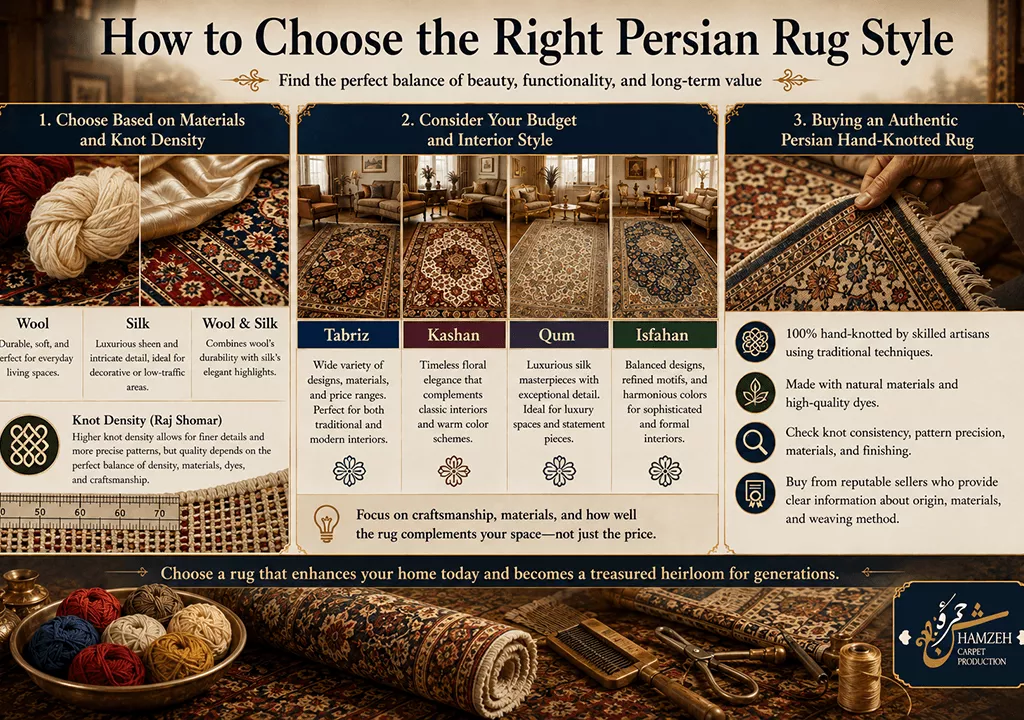
Choosing the right Persian rug style is about finding the best balance between beauty, functionality, and long-term value. While every handmade Persian rug reflects exceptional craftsmanship, the ideal choice depends on where the rug will be used, the look you want to achieve, and the level of maintenance you’re comfortable with. Considering a few key factors before purchasing can help you invest in a rug that you’ll appreciate for decades.
If you’re planning to purchase a handmade Persian rug, our The Complete Guide to Buying an Authentic Handmade Persian Rug explains everything from identifying authentic craftsmanship to evaluating materials, dyes, and overall quality before making an investment.
Choose Based on Materials and Knot Density
The materials used in a rug have a significant impact on its appearance, durability, and feel. Wool rugs are known for their resilience, softness, and practicality, making them an excellent choice for everyday living spaces. Silk rugs, by contrast, are prized for their luxurious sheen and intricate details, making them better suited to decorative or low-traffic areas. Some Persian rugs combine wool and silk to offer the durability of wool with the refined elegance of silk accents.
Knot density is another important factor, as it influences the clarity and precision of a rug’s design. A higher knot density often allows for finer patterns and more detailed artwork, but it should not be viewed as the sole indicator of quality. The finest handmade Persian rugs combine appropriate knot density with premium materials, balanced weaving, natural dyes, and skilled craftsmanship.
Consider Your Budget and Interior Style
Your budget and interior design should work together when selecting a Persian rug. If you’re looking for a versatile rug that complements a variety of décor styles, Tabriz rugs offer one of the broadest selections in terms of design, materials, and price range.
For classic interiors, Kashan rugs provide timeless floral elegance that pairs beautifully with traditional furniture and warm color schemes. If you’re furnishing a luxury space or looking for a statement piece, Qum rugs and Isfahan rugs offer exceptional artistry and refined craftsmanship that elevate formal living rooms, executive offices, and sophisticated interiors.
Rather than focusing solely on price, consider the rug’s craftsmanship, materials, and how well it complements your space. A well-chosen handmade Persian rug can remain both functional and beautiful for generations.
Buying an Authentic Persian Hand-Knotted Rug
Authenticity is one of the most important considerations when purchasing a Persian rug. Genuine Persian hand-knotted rugs are woven by skilled artisans using traditional techniques, with every knot tied by hand rather than produced by a machine. This craftsmanship gives each rug unique character, exceptional durability, and lasting value.
When evaluating a rug, look beyond its design. Examine the knot consistency on the back, the quality of the materials, the precision of the pattern, and the overall finishing. Reputable sellers should also provide clear information about the rug’s origin, materials, and weaving method.
Whether you choose a Tabriz, Kashan, Qum, or Isfahan rug, buying from a trusted source ensures you’re investing in an authentic piece of Persian craftsmanship—one that can be enjoyed today and passed down to future generations.
Frequently Asked Questions About Persian Rug Styles
What are the main Persian rug styles?
The four most recognized Persian rug styles are Tabriz, Kashan, Qum, and Isfahan, each representing a distinct weaving tradition. Tabriz rugs are known for their design versatility, Kashan rugs for timeless floral patterns, Qum rugs for luxurious silk craftsmanship, and Isfahan rugs for their balanced compositions and intricate details.
Which Persian rug is best?
There is no universal answer to which Persian rug is best. The ideal choice depends on your needs and preferences. Tabriz rugs are highly versatile and durable, Kashan rugs offer classic elegance, Qum rugs are prized for their fine silk artistry, and Isfahan rugs are admired for their precision and timeless design.
What is the difference between Tabriz and Kashan rugs?
The main difference in Tabriz vs Kashan rugs lies in their design approach. Tabriz rugs feature a wide variety of patterns, including floral, geometric, pictorial, and contemporary designs, while Kashan rugs are best known for their traditional floral medallions, rich colors, and symmetrical compositions. Both are exceptionally well-crafted, but they appeal to different design preferences.
Are Qum rugs always made of silk?
Not always. While Qum is famous for producing some of the world’s finest silk Persian rugs, not every Qum rug is woven entirely from silk. Some feature high-quality wool with silk highlights, while others combine both materials to balance durability with luxurious detail.
Which Persian rug is the most durable?
For everyday use, wool Persian rugs generally offer the best durability. Among the major weaving centers, Tabriz and Kashan rugs are particularly well suited to high-traffic living spaces due to their strong wool construction and excellent craftsmanship. With proper care, both can last for generations.
How can I tell if a Persian rug is authentic?
Authentic Persian rugs are hand-knotted rather than machine-made. You can usually identify them by examining the back of the rug, where individual knots and slight variations in the pattern are visible. Other indicators include high-quality natural materials, precise craftsmanship, and documentation from a reputable dealer confirming the rug’s origin and weaving method.
Do higher knot densities always mean better quality?
Not necessarily. Higher knot density allows for finer details and more intricate patterns, but it is only one measure of quality. The value of a handmade Persian rug also depends on the quality of the wool or silk, the use of natural dyes, the skill of the weaver, and the overall craftsmanship. A well-made rug with moderate knot density can often outperform a poorly woven rug with a higher knot count.
For a deeper explanation, see our complete guide to What Is Rug Knot Density (Raj Shomar)?
Which Persian rug style offers the best long-term value?
Each style offers value in different ways. Tabriz rugs are appreciated for their versatility and durability, Kashan rugs for their timeless appeal, Qum rugs for their luxurious silk craftsmanship, and Isfahan rugs for their artistic refinement. The best long-term value comes from choosing an authentic handmade rug that suits your lifestyle, décor, and appreciation for Persian craftsmanship.
Conclusion
The beauty of Persian rug styles lies in their diversity. While Tabriz, Kashan, Qum, and Isfahan rugs all share a legacy of exceptional craftsmanship, each offers its own unique combination of design, materials, and artistic character. From the remarkable versatility of Tabriz rugs to the timeless elegance of Kashan, the luxurious silk craftsmanship of Qum, and the refined precision of Isfahan, every style reflects centuries of Persian weaving tradition.
Rather than asking which style is universally the best, it’s more valuable to consider which rug best suits your home, lifestyle, and personal taste. By understanding the differences between Persian rugs, you can make a more confident choice—whether you’re looking for a durable everyday rug, a sophisticated statement piece, or a collectible work of art.
An authentic handmade Persian rug is more than a decorative accessory; it’s an investment in craftsmanship, heritage, and lasting quality. Taking the time to compare the distinctive characteristics of each weaving tradition will help you select a rug that you’ll enjoy for many years and, in many cases, pass on to future generations.